
Casino Loss Limits Explained: How Player Loss Controls Work
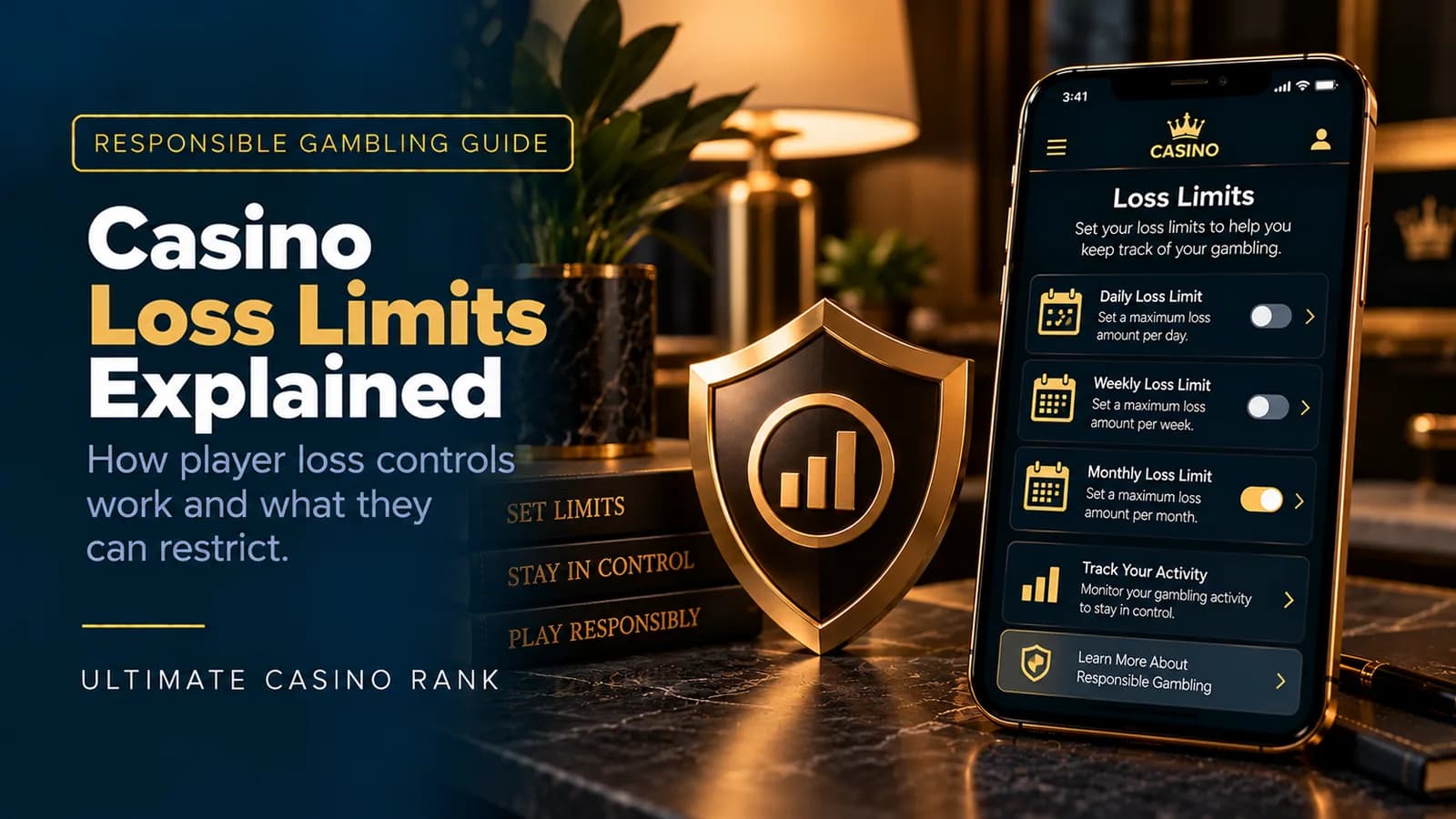
Loss limits are responsible gambling controls that can restrict gambling losses over a defined period.
They are different from deposit limits because they focus on gambling outcomes rather than simply restricting how much money can be added to an account.
Not every casino offers loss limits, and the way they are calculated can vary between operators and jurisdictions.
What Is a Casino Loss Limit?
A loss limit is a player-control feature designed to restrict losses according to the rules of the casino's responsible gambling system.
Depending on the operator, limits may apply across periods such as:
- Daily
- Weekly
- Monthly
- Other defined periods
The exact options and calculations should be checked before activating the control.
How Does a Loss Limit Work?
Once a loss limit is active, the casino tracks gambling activity according to its defined calculation.
When the applicable limit is reached, further gambling can be restricted according to the operator's system.
However, the meaning of "loss" can differ between platforms.
That makes it important to understand exactly how the casino calculates the figure.
How Can Casinos Calculate Losses?
There is no universal calculation that should be assumed to apply to every operator.
Depending on the system, factors such as stakes, winnings and other account activity may affect the calculation.
Players should read the operator's responsible gambling information to understand:
- What counts as a loss
- Which games are included
- When the calculation resets
- How winnings affect the figure
- Which account activity is included
Is a Loss Limit the Same as a Deposit Limit?
No.
A deposit limit restricts the amount of money that can be added to a gambling account.
A loss limit focuses on gambling losses according to the casino's defined calculation.
For example, someone could deposit money without losing all of it. That means deposits and losses represent different measures of gambling activity.
Is a Loss Limit the Same as a Betting Limit?
No.
A betting or wagering limit can restrict how much is staked.
A loss limit instead focuses on the resulting losses according to the operator's calculation.
The availability of either feature depends on the casino and jurisdiction.
What Happens When You Reach a Loss Limit?
When an active loss limit is reached, further gambling activity can be restricted according to the casino's rules.
The restriction may remain until the applicable period resets or other conditions are satisfied.
Check the operator's responsible gambling information for the exact process.
Can You Lower a Loss Limit?
Where adjustable loss limits are available, operators may provide a process for reducing an existing limit.
The timing of the change depends on the casino and applicable requirements.
A lower limit may be treated differently from a request to increase the amount.
Can You Increase a Loss Limit?
Depending on the operator and jurisdiction, increasing a responsible gambling limit may involve additional procedures or a delay before the change takes effect.
This can prevent an active restriction from being immediately weakened.
Check the specific rules before requesting a change.
Do Withdrawals Affect Loss Limits?
This depends on how the operator calculates losses.
A withdrawal and a gambling loss are not inherently the same thing.
Players should not assume that withdrawing or depositing money automatically changes their remaining loss allowance in a particular way.
Refer to the operator's definition.
Do Bonuses Affect Loss Calculations?
Treatment of bonus funds can vary between systems.
If bonus balances, promotional funds or bonus winnings are relevant to a loss-limit calculation, the operator should explain how they are treated.
Do not assume cash and bonus balances are calculated identically.
Is a Loss Limit the Same as a Time-Out?
No.
A loss limit controls gambling according to a financial threshold.
A time-out restricts gambling access for a defined period.
Someone who wants a complete temporary break may therefore find a time-out more appropriate than relying solely on a financial limit.
Is a Loss Limit the Same as Self-Exclusion?
No.
Self-exclusion is a stronger control designed to restrict gambling access for an applicable period.
A loss limit can allow gambling to continue until the defined threshold is reached.
These tools serve different purposes.
What If a Casino Does Not Offer Loss Limits?
Not every casino provides the same responsible gambling controls.
Other available tools may include:
- Deposit limits
- Time-outs
- Reality checks
- Session reminders
- Self-exclusion
- Account activity information
Players should check which controls are actually available through their account.
What Should You Check Before Setting a Loss Limit?
Check:
- How the casino defines a loss
- Which games and products are included
- Which limit periods are available
- When the calculation resets
- How winnings are treated
- Whether bonus funds are included
- How decreases are handled
- How increases are handled
- What happens when the limit is reached
- Which additional responsible gambling tools are available
Final Thoughts
Loss limits can provide an additional way to control gambling expenditure, but they should not be confused with deposit limits or time-based restrictions.
Because the calculation of losses can vary between operators, players should understand exactly how a particular casino defines and applies its loss limits.
If stronger restrictions are needed, options such as time-outs and self-exclusion should also be considered.