Why Do Online Casinos Verify Withdrawals?
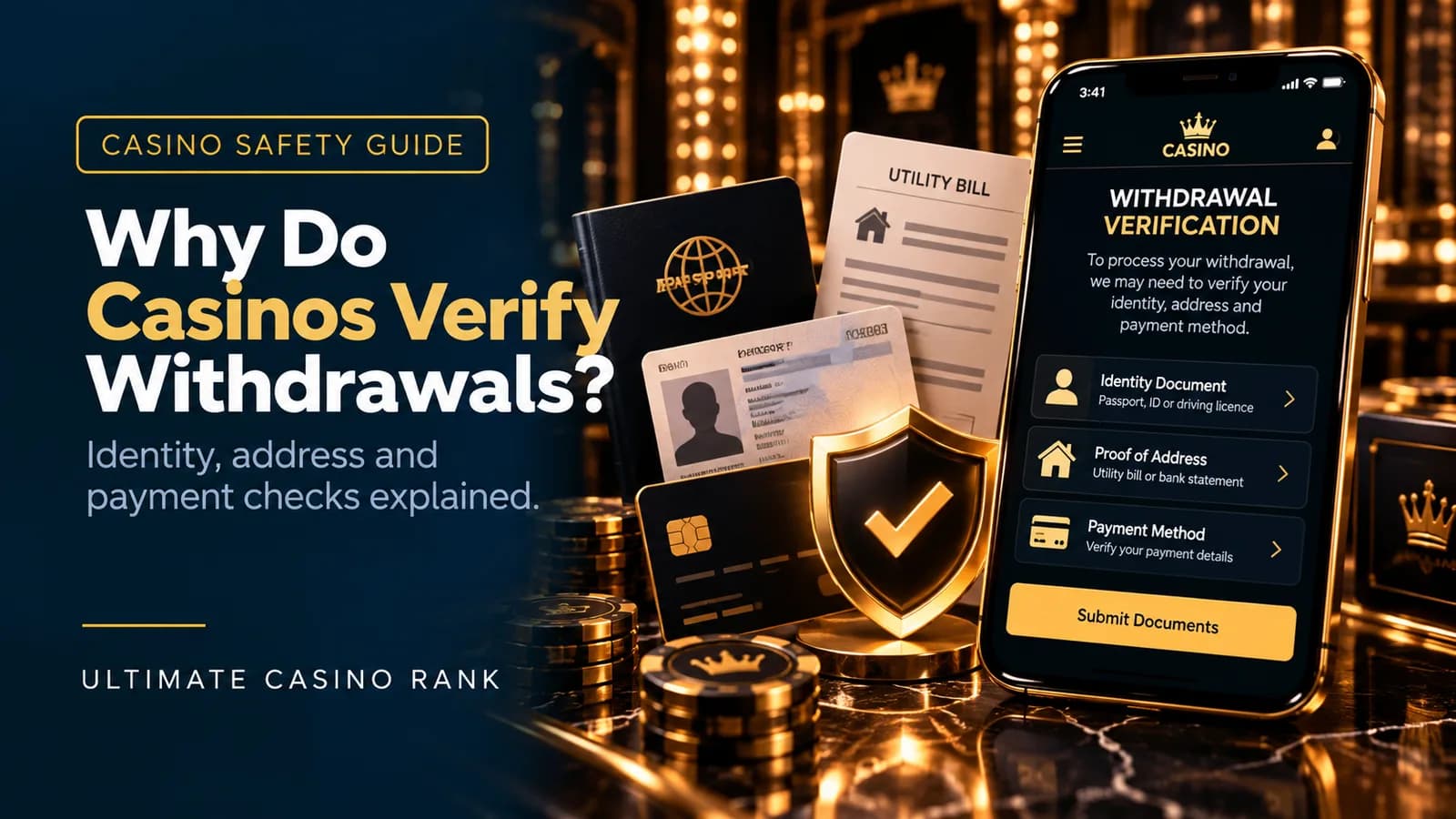
Online casinos conduct verification checks to protect customer accounts, confirm payment ownership and meet applicable legal and regulatory requirements.
Although these checks are often discussed when someone requests a withdrawal, identity verification and other customer checks may take place much earlier in the account lifecycle.
Understanding why casinos perform these checks helps players distinguish legitimate security requirements from unnecessary or poorly explained withdrawal delays.
Why Do Online Casinos Verify Withdrawals?
Online casino verification can serve several different purposes, including:
- Confirming the identity of the account holder
- Preventing unauthorised access and fraudulent withdrawals
- Checking whether payment methods belong to the correct person
- Meeting anti-money-laundering requirements
- Complying with gambling regulations
- Maintaining accurate customer information
These requirements vary depending on the operator, jurisdiction, account circumstances and applicable laws.
Verification should be proportionate to legitimate requirements and should not be used simply to create unnecessary barriers to withdrawing funds.
1. Confirming the Identity of the Account Holder
One of the main purposes of customer verification is to establish that an account belongs to the person who registered it.
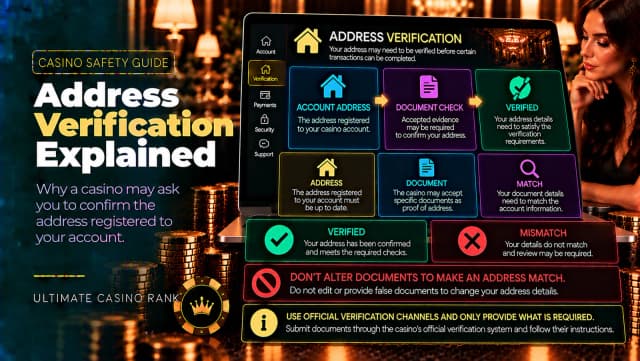
Online gambling operators may need to verify information such as a customer's name, date of birth and residential address.
This helps operators meet identity requirements and identify potential discrepancies between registered information and supporting records.
Identity checks may also help prevent an account from being used by someone who is not eligible to gamble.
For a detailed explanation of these procedures, see our guide to casino verification and KYC requirements.
2. Preventing Fraud and Unauthorised Withdrawals
Account security is another reason casinos may review withdrawal-related activity.
For example, an operator may need to investigate whether an unusual transaction was genuinely authorised by the registered account holder.
Potential security concerns can include:
- Suspected account takeover
- Unusual access or transaction activity
- Conflicting account information
- Possible identity misuse
- Payment details that require clarification
Appropriate checks can help protect customers from unauthorised transactions.
However, not every withdrawal review indicates suspected fraud. Some checks may be routine or required under applicable procedures.
3. Verifying Payment-Method Ownership
Casinos may need to establish that a payment method associated with an account or withdrawal is eligible for use.
Depending on the operator and circumstances, this can involve confirming ownership of a bank account, payment card or e-wallet.
Payment-method checks help operators assess whether transactions comply with their payment policies and applicable security requirements.
For example, discrepancies between an account holder's identity and a payment method may require clarification.
Players should only use eligible payment methods and follow the operator's published requirements.
A payment method being accepted for a deposit does not automatically mean it supports withdrawals.
4. Meeting Anti-Money-Laundering Requirements
Online gambling businesses can be subject to laws and regulatory obligations designed to prevent money laundering and other financial crimes.
These obligations may require operators to understand their customers, monitor relevant transactions and investigate activity that presents particular risks.
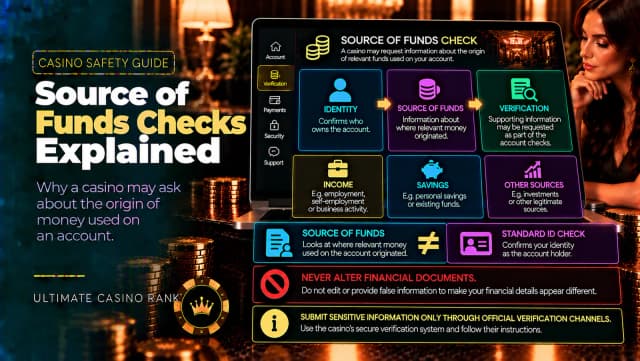
Depending on the jurisdiction and circumstances, an operator may need further information concerning the origin of funds or relevant financial activity.
These checks are not identical to basic identity verification.
For example, confirming someone's identity establishes who they are, while source-of-funds checks may concern where money used in gambling originated.
Not every player will necessarily be asked for the same information.
Operators should handle such requests according to applicable law and explain legitimate information requirements through official channels.
5. Complying With Gambling Regulations
Licensed online casinos must follow the rules applicable to the markets in which they operate.
These rules can influence how customers are identified, when verification must take place and what information can legitimately be requested.
How Does Verification Work in Great Britain?
Great Britain provides an important example of why regulatory differences matter.
Under the UK Gambling Commission's customer identity verification requirements, relevant remote gambling operators must establish and verify customer identity before customers are permitted to gamble.
Required identity information includes the customer's name, address and date of birth.
Operators must not ordinarily make a withdrawal conditional on additional information that they could reasonably have requested earlier.
However, operators may still request information that becomes necessary at that stage because of another legal obligation.
These requirements are designed, in part, to prevent avoidable withdrawal difficulties caused by inappropriate verification practices.
For the official rules, consult the UK Gambling Commission's customer identity verification requirements.
Do All Countries Follow the Same Rules?
No.
Licensing, customer verification and payment requirements differ between gambling jurisdictions.
Players should check which regulator oversees an operator and consult the requirements applicable to their location.
A procedure that applies to a UK-licensed operator should not automatically be assumed to apply identically to every casino worldwide.
6. Keeping Customer Information Accurate
Verification is not always a one-time activity.
Some operators have continuing obligations to maintain accurate customer information and carry out appropriate checks when circumstances change.
Additional information may be relevant if:
- Registered personal information changes
- Previously verified payment details change
- Existing documentation is no longer valid
- New information creates a legitimate compliance concern
- Further checks are required under applicable law
These circumstances do not automatically justify delaying every withdrawal. Requests must still comply with the operator's regulatory obligations.
Is KYC the Same as Anti-Money-Laundering Verification?
Know Your Customer (KYC) and anti-money-laundering (AML) controls are related, but they are not interchangeable.
KYC generally concerns establishing and verifying relevant customer information.
AML controls may include customer due diligence, transaction monitoring, risk assessments and additional checks intended to prevent financial crime.
The exact obligations depend on the applicable regulatory framework.
Understanding this distinction can help players understand why an operator might request different information at different stages.
Can a Casino Verify Someone Who Has Already Withdrawn Successfully?
Yes, where further checks are legitimately required.
A previous successful withdrawal does not guarantee that no further information will ever be needed.
However, operators should not use repeated verification requests simply to obstruct withdrawals.
Any additional request should be consistent with the operator's applicable legal and regulatory duties.
Can Casinos Use Verification to Delay Payments?
Legitimate verification requirements may affect the time taken to process a withdrawal.
However, there is an important difference between conducting necessary checks and imposing avoidable obstacles.
Players should be informed about relevant verification requirements, and operators should not use unnecessary checks to prevent customers from accessing funds.
In Great Britain, the UK Gambling Commission has specifically addressed inappropriate withdrawal delays and identity-verification practices.
If a withdrawal remains unresolved, players should request a clear explanation from the operator and use the applicable complaints procedure where necessary.
For further information about the process itself, read our guide to casino withdrawal processing times.
How Can Players Recognise a Legitimate Verification Request?
A legitimate request should come through an authorised operator channel and relate to information reasonably required under the applicable procedures.
Before supplying documents or personal information:
- Confirm that the request comes from the genuine operator.
- Use the operator's official website or approved secure channel.
- Check which information has been requested and why.
- Avoid responding to suspicious links or unofficial social-media accounts.
- Never disclose passwords or one-time authentication codes.
Players should not alter documents or attempt to bypass legitimate security requirements.
Frequently Asked Questions
Does every online casino verify withdrawals?
Verification requirements differ between operators and jurisdictions. Some checks may be completed before a player is allowed to gamble, while additional checks may be necessary in particular circumstances.
Does a verification request mean the casino suspects fraud?
No. Verification can be routine or legally required. A request for further information does not automatically mean the player is suspected of wrongdoing.
Why might a casino ask about the source of funds?
Depending on the operator and applicable requirements, source-of-funds information may be relevant to anti-money-laundering checks or other legitimate assessments.
Can verification requirements differ between casinos?
Yes. Requirements depend on licensing, jurisdiction, payment methods, account circumstances and other applicable rules.
What should I do if a verification request seems unreasonable?
Ask the operator to explain the requirement through its official support channel. If the issue remains unresolved, use the operator's complaints procedure and any applicable independent dispute-resolution or regulatory route.
What Should You Do Before Requesting a Withdrawal?
Understanding why verification exists is useful, but players should also know how to prepare for a legitimate payout request.
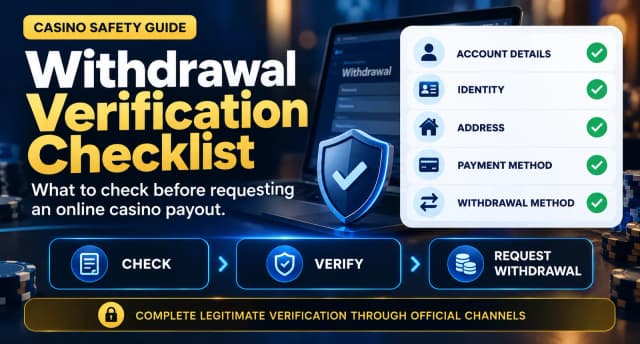
Our casino withdrawal verification checklist covers the practical information worth reviewing.
For an explanation of what may happen after submitting a request, see our guide to how casino withdrawal verification works.
Final Thoughts: Why Casinos Verify Withdrawals
Online casinos may perform withdrawal-related checks for several reasons, including identity protection, payment security, fraud prevention and regulatory compliance.
These controls can protect customers and help operators meet their obligations, but their scope and timing must remain consistent with applicable requirements.
Verification should not be treated as an automatic justification for unnecessary withdrawal delays.
Players should understand the relevant requirements, use official communication channels and seek clarification when a request appears unreasonable or inconsistent with the operator's published procedures.
Ready to pick a casino?
See how the brands in this article compare on our full ranked list, or browse today's current offers.