
Blackjack Explained: Rules, Card Values and How the Game Works
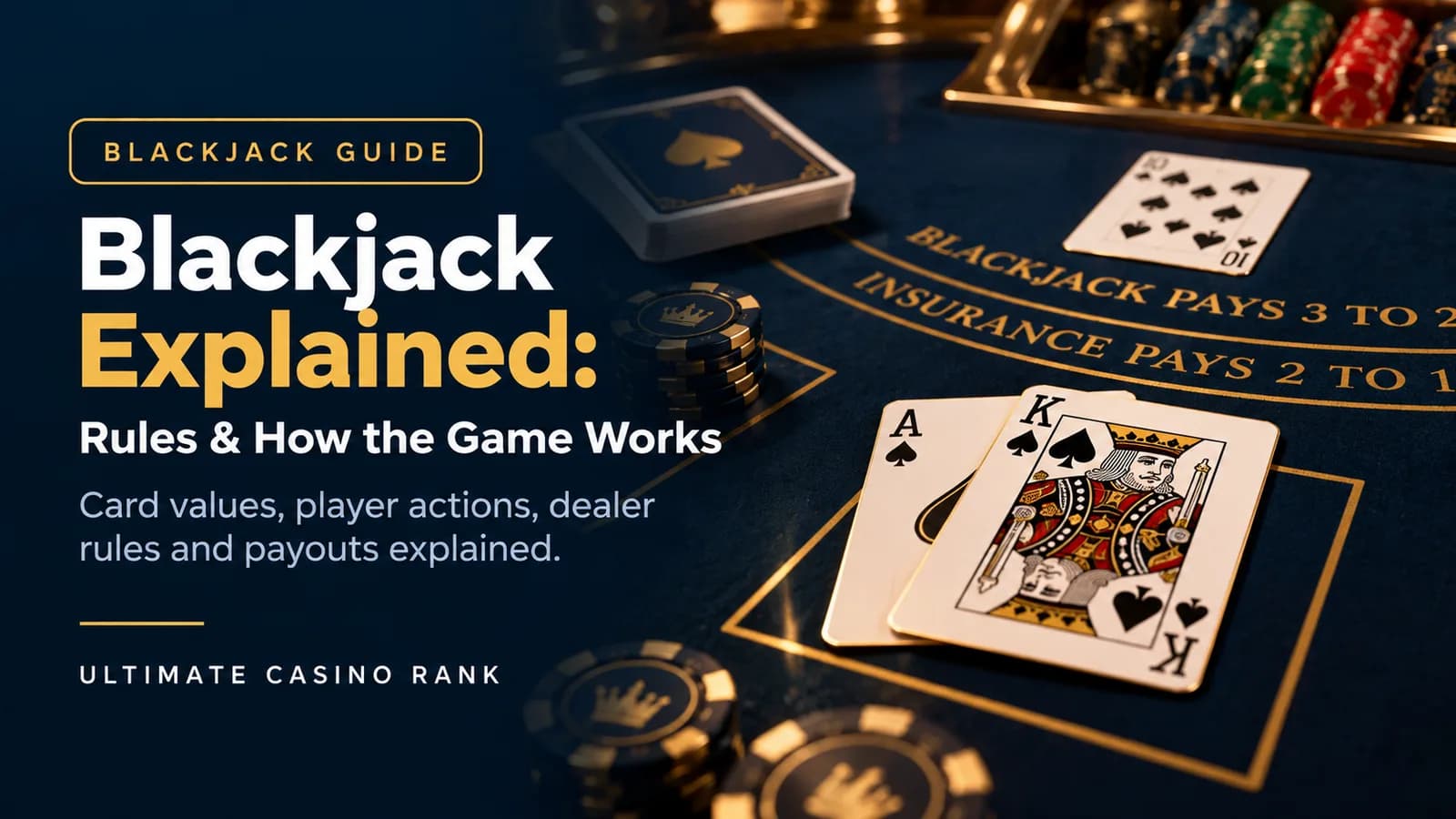
Blackjack is one of the most widely recognised casino table games. The basic objective is straightforward: create a hand with a value closer to 21 than the dealer without going over 21.
However, understanding card values, dealer rules and the different decisions available during a hand is important before playing.
What Is the Objective of Blackjack?
In blackjack, players compete against the dealer rather than against each other.
The objective is generally to either:
- Finish with a higher hand value than the dealer without exceeding 21
- Have the dealer exceed 21 while your hand remains at 21 or below
- Receive a blackjack when the dealer does not
If your hand exceeds 21, it is known as a bust and normally loses immediately.
What Are the Card Values in Blackjack?
Blackjack uses a standard deck of playing cards.
Cards 2 through 10 are worth their face value.
Jack, Queen and King are each worth 10.
An Ace can usually count as either 1 or 11, depending on which value is more favourable for the hand without causing it to exceed 21.
For example:
Ace + 7 = 8 or 18
A hand in which an Ace can still count as 11 without exceeding 21 is commonly called a soft hand.
What Is a Blackjack?
A blackjack is normally a two-card hand consisting of:
- An Ace
- A 10-value card
The 10-value card can be a 10, Jack, Queen or King.
This creates a total of 21 using the first two cards.
A blackjack is different from reaching 21 with three or more cards and can have a different payout depending on the table rules.
How Does a Blackjack Round Work?
At the beginning of a standard round, the player and dealer receive cards according to the rules of the particular blackjack variant.
The player then chooses from the actions available at the table.
These can include:
- Hit
- Stand
- Double down
- Split
- Surrender
Not every option is available in every game.
What Does Hit Mean?
Choosing hit means requesting another card.
The new card is added to the value of the player's existing hand.
Players can generally continue hitting while their hand remains below 21, subject to the game's rules.
If the total exceeds 21, the hand busts.
What Does Stand Mean?
Choosing stand means keeping the current hand and taking no additional cards.
The dealer then completes their hand according to the table's dealer rules.
What Does Double Down Mean?
Doubling down generally allows a player to increase the original wager in exchange for receiving one additional card.
The precise conditions vary between blackjack games.
Some tables allow doubling on a wide range of starting hands, while others impose restrictions.
Check the individual table rules before playing.
What Does Splitting Mean?
If the first two cards meet the game's requirements for a pair, the player may be able to split them into two separate hands.
An additional wager is normally required for the second hand.
Each hand is then played separately.
Rules involving split Aces, resplitting and doubling after a split can vary between blackjack variants.
What Is Surrender?
Some blackjack games offer a surrender option.
This allows a player to give up the hand under specified conditions and receive part of the original wager back.
Surrender is not offered at every blackjack table, and the exact rules can differ.
How Does the Dealer Play?
Unlike the player, the dealer does not normally choose freely whether to hit or stand.
Dealer actions are determined by the rules of the table.
For example, a game may specify how the dealer must play totals such as 16 or 17.
One particularly important rule to check is whether the dealer stands or hits on a soft 17.
What Happens If the Player and Dealer Have the Same Total?
If the player and dealer finish with the same qualifying hand value, the result is generally a push.
In a standard push, the original wager is normally returned.
Specific rules can vary, particularly when blackjack or special side bets are involved.
What Does Blackjack Pay?
Blackjack payouts depend on the table rules.
A traditional blackjack payout is often 3:2, but some tables use different payouts, such as 6:5.
Because payout rules affect the mathematics of the game, players should check the table information before placing a wager.
Do not assume every blackjack game uses the same payout.
Are All Blackjack Games the Same?
No.
Blackjack variants can differ in areas such as:
- Number of decks
- Blackjack payouts
- Dealer soft-17 rules
- Doubling restrictions
- Splitting rules
- Surrender availability
- Side bets
These differences can affect how the game works and its underlying mathematics.
Live Blackjack vs Digital Blackjack
Online casinos can offer both digital and live dealer blackjack.
Digital blackjack uses software to operate the game according to its programmed rules.
Live blackjack uses a real dealer and table streamed through video, with players placing available wagers through an online interface.
In either case, check the specific game's rules before playing.
What Should You Check Before Playing Blackjack?
Before joining a blackjack table, check:
- The blackjack payout
- Dealer rules
- Number of decks where stated
- Minimum and maximum bets
- Doubling rules
- Splitting rules
- Surrender availability
- Rules for split Aces
- Any available side bets
- The complete game rules and paytable
Final Thoughts
Blackjack is based on a simple objective: finish closer to 21 than the dealer without exceeding 21.
The game becomes more detailed once actions such as hitting, standing, doubling and splitting are introduced.
Rules can also vary significantly between blackjack tables, so understanding the specific payout structure and dealer rules is important before playing.